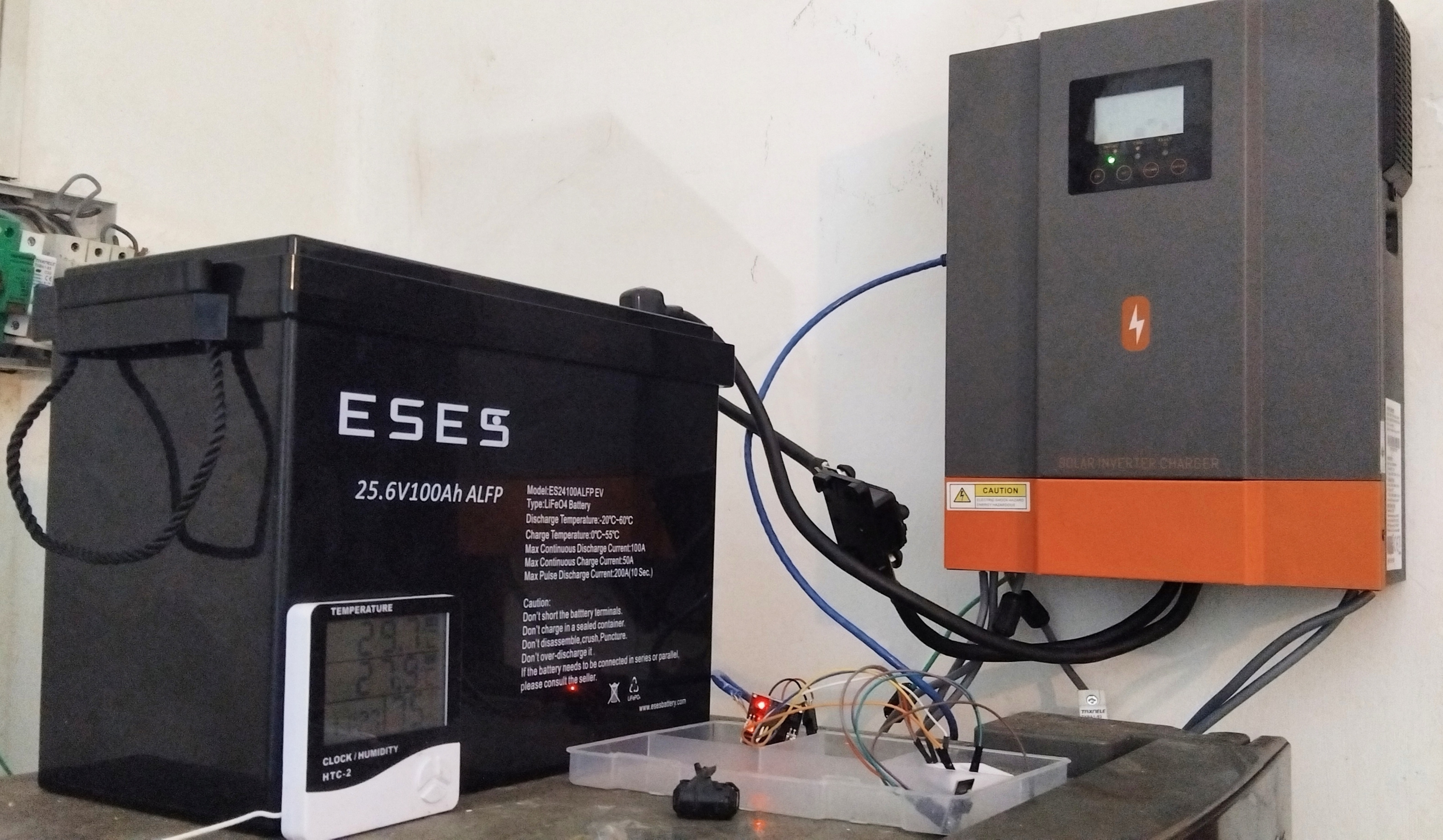
I had recently built a budget solar system mainly to avoid power cuts. Requirement was a very simple one but because of the pricings and system options (more like limitations), it felt like installing a powerplant inside the house. After about three months of testing and analyzing data, I found below points that can be very useful for a newbie like me to build their first solar system, not losing an arm and a leg.
Calculating the power requirement Link to heading
This can be calculated by totaling the rated power of connected devices. But fixing a smart meter (with access to the data as reports) to your main supply will be the best option, since it will provide the actual view of the energy usage like the total and peak numbers. As an example, a refrigerator won’t be running at its rated power all the time and so does other equipment’s like microwaves and washing machines. This can be helpful to size the battery and inverter requirements since they can be very expensive.
Getting an “All in One” inverter Link to heading
Usually, a solar system can consists of four components, solar panels, a solar charge controller, inverter and a battery. You can buy the individual components and usually its cheaper. But there are some devices with the solar charge controller, inverter and a grid charger built in. These will have its own setup menu to control the aspects of each component, and its useful in scenarios where you need some automations done.
Idle power of the inverter Link to heading
This was something I missed and came to be very important to your battery capacity calculations. It seems most of the battery supported inverters are powering their internal components only using the battery. Logic behind this seems to be to support the grid to battery switchover more seamless. So even you have switched the inverter to grid mode, your battery will be discharged by a small amount. Since these inverters consists of a grid charger inbuilt, you can set it to charge the battery once the voltage comes to a certain point but it might increase your grid usage.
Inbuilt connectivity options Link to heading
Having an inbuilt connectivity option to control and gather data is very important. This helps you to integrate different components together and to gather data for the future optimizations, troubleshooting’s and etc. This helped me to run the current setup with just a single battery which is a huge cost saving.
Type of batteries to use Link to heading
To me getting a Lithium (LifePo4) battery was the best choice considering its ability for frequent discharges, longevity and maintenance free aspect. Other battery types can be cheaper options too, if your requirement is a backup power system in case of a grid failure. However, the physical battery size might be a problem, if you are living in a small space. A normal LifePo4 battery can be discharge up to 90% but the recommendations for lead-acid ones are around 50%. Therefor you might require twice the space plus some extra room for the ventilation.
EMI\RF noise Link to heading
It seems most of the cheaper inverter’s won’t handle the electrical noise generated by the solar panels properly. In my case, adding ferrite chokes solved the problem for computers, but still having issues with mobile touch screens.
Finally these are my personal thoughts on a very short experience, so please feel free to correct anything that seems wrong because there is nothing more dangerous than posting incorrect information.